NOTICE: Here inform to all M.Sc (Botany) students that is your III-SEM practical P-I and P-II examinations confirmed on 9th Jan, 2020. And both papers conducting on same day of morning and afternoon session. Inform to your classmates..
Friday, 3 January 2020

Tuesday, 27 August 2019
B.Sc., BOTANY- PAPER-V IMP. QUESTIONS
B.Sc.,
BOTANY/ SEM-V(CBCS)
P-V:
CELL BIOLOGY & GENETICS
Important Questions
Essay Questions:
1. Ultra structure of cell walL
2. Ultra
structure of nucleus
3 Double
helix model of DNA (Watson & Crick)
4. Mechanism
of DNA replication & types
5. Meiosis
& their significance
6. Chromosomal
aberrations (Structural & Numerical changes)
7.Gene
interaction (Complementary genes & Epistasis)
8.Two
& Three point test cross
9.Transcription
mechanism
10.Translation
mechanism
Short questions:
1. Chemical
composition of Cell wall
2. Fluid
mosaic model of plasma membrane
3. Cell
cycle & regulation
4. Types
of RNA
5. Eu
& Heterchromatin
6. Karytypes
7. Plasmids
8. Cp-DNA
9. Ac-Ds
elements in maize
10. Gene
mutations
11. Linkage
12. Crossing
over mechanism
13. Law
independent assortment
14. Promoter
15. RNA
polymerase
16. Genetic
code
17. Lac
Operon
18. Trp
Operon
19. Polytene
chromosome
20. Lamp
brush chromosome.
Dept.
of Botany
Vivekavardhani
degree & P.G. College
Wednesday, 24 July 2019
VI-SEM (III-YEAR) B.SC., BOTANY (CBCS) RESULTS- MAY 2019
Kakatiya University announced all semester CBCS results, conducted in May-2019. In this results, III-Year B.SC (Life Science) VI-SEM Botany students performed best. The first outgoing students in semester pattern in academic year 2018-19 with secured outstaning grades and pass percentage in Botany. The results as follows..
In this results, students who got more than 8 points is 4 numbers, more than 7.5 points is 5 numbers. Total 18 'O' grades secured.
'O' = 18 (B7= 05 & B8=13)
'A' = 40 (B7= 18 & B8=22)
First with Distictions 15 numbers (142173005, 3007, 3008, 142173103, 3106. 3008, 3009, 3112, 3127, 3130, 142173301, 3308, 3309, 3314, 3320).
First with Distictions 15 numbers (142173005, 3007, 3008, 142173103, 3106. 3008, 3009, 3112, 3127, 3130, 142173301, 3308, 3309, 3314, 3320).
Highlight in B8 (TCB) BZC & MBBC is 100 % passed.
Pass percentage :
B7 (Physiology) = 90 % , and
B7 (Physiology) = 90 % , and
B8 (Tissue culture-TCB)= 96 %.
Topper in semester (SGPA):
1. M.Tejaswi (142173007) = 8.35 SGPA
2. T. Venkatshwarlu (142173127) = 8.34 SGPA
3. P.Ravali (142173008) = 8.17 SGPA
4. Vijetha Sharma (142173130) = 8.09 SGPA
Topper in CGPA (Life Sciences) for academic year 2018-19
1. TEJASWI (1421730007) = 8.04 CGPA
2. VIJETHA SHARMA (142173130) = 8.03 CGPA
Congratualations to all Botany students..
From :
Dept. of Botany,
Vivekavardhani Degree & PG College- Kothagudem.
Saturday, 1 June 2019
PG BOTANY II & IV—SEM PRACTICAL EXAMS DATES
Here inform to all PG BOTANY II & IV —Semester students, your practicals exams held on 3rd & 4th June, 2019 at 8:000AM.
Tuesday, 23 April 2019
Remote Sensing
Remote
sensing
Remote sensing is the acquisition or obtaining information
about an object by a device that is not in contact with the object.
Remote sensing is
used in numerous fields, including geography, land surveying and most Earth
Science disciplines (for example, hydrology, ecology,
meteorology, oceanography, glaciology, geology
Principles
of Remote Sensing:
Remote
sensing involves the detection and measurement of the radiations of different
wavelengths reflected or emitted from distant objects or materials, which helps
in their identification and categorization.
It offers four basic components to measure, which include:
i)
The energy source
(ii)
The transmission path
(iii)
The target
(iv)
The satellite sensor
Among these, the
energy source or electromagnetic energy, is very important, as it serves as the
crucial medium for transmitting information from the target to the
sensor.
Types
of Remote Sensing:
Satellite remote sensing involves gathering information about
features on the Earth’s surface from orbiting satellites, which may carry
either of the following two types of sensor systems:
(i)
Passive System:
It
generally consists of an array of small sensors or detectors, which records the
amount of electro-magnetic radiation reflected and/or emitted from the Earth’s
surface. Thus, passive remote sensing relies on naturally reflected or emitted
energy of the imaged surface.
Most
remote sensing instruments fail into this category, obtaining pictures of
visible, near-infrared and thermal infrared energy. A multi-spectral scanner is
an example of a passive system (Fig. 11.3). Passive visible and near-infrared
data are used in a variety of GIS applications, for example in the classification
of vegetation and land-use, and may be performed at a variety of temporal and
spatial scales.

(ii)
Active System:
This
type of a system propagates its own electro-magnetic radiation and measures the
intensity of the return signal. Thus, active remote sensing means that the
sensor provides its own illumination and measures what comes back. Remote
sensing technologies that use this type of system include lidar (laser) and
radar.
Synthetic
Aperture Radar (SAR) is an example of an active system.
As for example,
radar images are sensitive to the shape, orientation and size of leaves and
their moisture content, rather than the vegetation color. Similarly, airborne
lidars have been largely used for mapping surface topography in three
dimensions. Existing and planned radar and lidar altimeters will also help in
monitoring closely the elevation of the world’s ice caps and sea level with
centimeter precision
Applications
of Remote Sensing:
Satellite
data allows the proper management of our renewable and non-renewable resources
as it provides timely and detailed information about the Earth’s surface.
Following are a few examples of some of the important uses of
satellite data:
(i)
Assessment and monitoring of vegetation types and their status.
(ii)
Agricultural property management planning and crop yield assessment.
(iii)
Soil surveys including mineral and petroleum exploration.
iv)
Litho logic mapping.
(v)
Monitoring and planning of water resources and groundwater exploration.
(vi)
Geographic information
(vii)
Map making and revision and production of thematic maps.
(viii)
Weather and agricultural forecasts and assessment of environment and natural
disasters.
(ix)
Urban planning.
(x)
Image processing.
(xi)
Precision geo-referencing.
(xii)
Laser film writing and printing.
Applications of Remote Sensing in Forest Resource Management:
(i)
Satellite imagery can provide the visible boundaries of soil types, while
remote sensing provide for a shallow penetration of soils. Additional physical
data can be obtained from spectral signatures for the soil surfaces.
ii.
Multi temporal techniques can be used to map dynamical features, erosion and
soil moisture.
(iii)
Remote sensing can also be used in combination with ground radar, to detect
changes of diagnostic soil horizons such as albic, spodic and argillic horizons
or soil/rock boundaries.
*******
Tuesday, 19 March 2019
III-B.Sc / V-SEM (BOTANY-CBCS) RESULTS-2019
Kakatiya university announced I, III & V- Semesters examination results (Nov/Dec-18). In this course, the Botany students of III- BSc/ V-Semester performs good in examination and got good grades. The passed percentage of B5- 86.27 % and B6- 90.16 %. And getting 4 'O' grades and 31 'A' grades in (B5 & B6) Botany .
SEMESTER TOPPERS:
1. M. TEJASWI (BTBC-1142173007) = 8.35 SGPA
2. G. GRACE EVANGEL(BZC-142173112) = 8.32 SGPA
3. P. RAVALI (BTBC-142173008) = 8.23 SGPA
4. K. NAGAJYOTHI (MBBC-142173309) = 8.13 SGPA
5. T. BHAVANA (BZC-142173129) = 8.06 SGPA.
'O' Grades :
1. L.PAVAN KALYAN (BTBC-142173005) in B5
2. M. TEJASWI (BTBC-142173007) in B5
3. P. RAVALI (BTBC-142173008) in B5
4. MD SANA TABASSUM (BZC-142173121) in B6.
Congratulations for the student above for best perform.
SEMESTER TOPPERS:
1. M. TEJASWI (BTBC-1142173007) = 8.35 SGPA
2. G. GRACE EVANGEL(BZC-142173112) = 8.32 SGPA
3. P. RAVALI (BTBC-142173008) = 8.23 SGPA
4. K. NAGAJYOTHI (MBBC-142173309) = 8.13 SGPA
5. T. BHAVANA (BZC-142173129) = 8.06 SGPA.
'O' Grades :
1. L.PAVAN KALYAN (BTBC-142173005) in B5
2. M. TEJASWI (BTBC-142173007) in B5
3. P. RAVALI (BTBC-142173008) in B5
4. MD SANA TABASSUM (BZC-142173121) in B6.
Congratulations for the student above for best perform.
Dept. of Botany
Vivekavardhani Degree & PG College-Kothagudem
Wednesday, 14 November 2018
Dedifferentiation and Re differentiation
What is Dedifferentiation?
Under certain conditions, plants cells that are already differentiated and lost the ability of further division regain the capacity of division and differentiation. This process is known as dedifferentiation. The fully differentiated parenchyma cells undergo dedifferentiation, which leads to the formation of cork cambium and inter-fascicular cambium. A dedifferentiated tissue has the ability to act as meristem that could give rise to a different set of cells. The ability of those cells for further differentiation depends on different parameters such as genetic and epigenetic variations. This concept is used in plant tissue culture to develop a callus.
What is Redifferentiation?
Once new cells are formed from the dedifferentiated tissues that act as meristems, the cells lose their ability for further division and differentiation. Eventually, they get mature in order to accomplish specific functions of the plant body. Secondary xylem and secondary phloem are the best examples to describe the process of redifferentiation. Dedifferentiated vascular cambium divides further to give rise to the secondary xylem in the inside and secondary phloem on the outside. The secondary phloem and secondary xylem cells lose their ability for further division; instead, they become mature to fulfill specific functions of the plant body, which include transportation of food and water, respectively. Phelloderm is a layer of secondary tissues that is produced by the dedifferentiated cork cambium. Similar to secondary xylem and phloem, phelloderm’s cells lose their ability for further differentiation but become mature in order to perform specific functions such as limitation of dehydration and prevention of the entry of pathogens into the plant body due to the destruction of the epidermis.
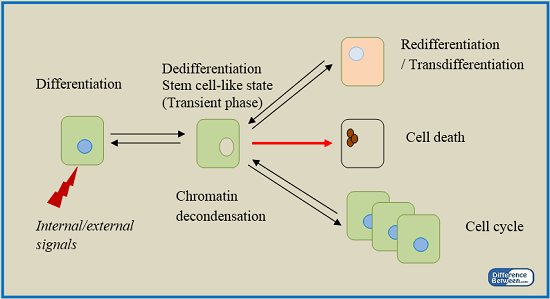
Figure 01: Differentiation and Redifferentiation
Subscribe to:
Posts (Atom)